
Trenching and Drainage for Adelaide Sites
Excavate narrow service or drainage routes to nominated lines and grades for the relevant licensed trade.
Send My Project Details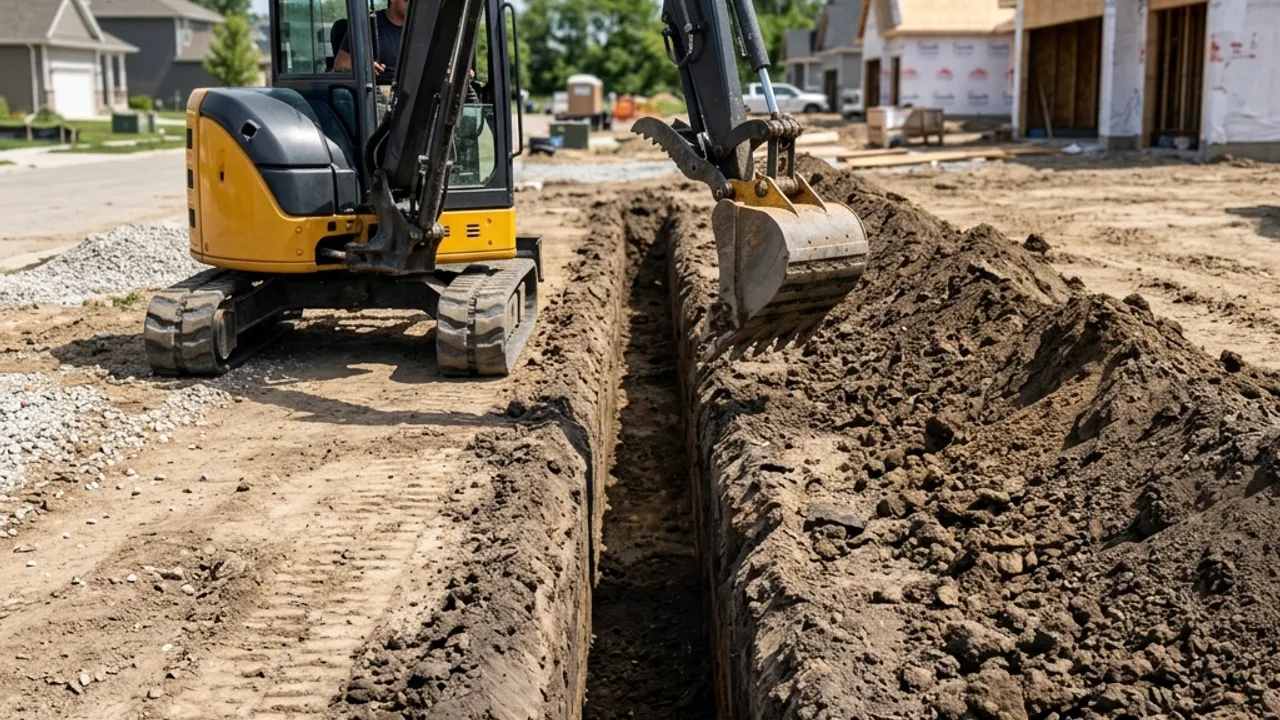
Earthmoving Adelaide planning for trenching and drainage
A trench needs a known route, depth, width, grade and purpose before machinery starts. The relevant licensed trade should confirm installation and connection requirements before excavation fixes the profile.
What the trenching and drainage scope may include
The decision that controls trenching and drainage
Plans do not prove the exact position or depth of every asset. The excavation method changes near existing services, structures and unstable ground.
Why preparation matters for trenching and drainage
Adelaide site conditions to raise early
Trenching across established Adelaide properties demands current service information, a route that preserves the required fall and a method suited to nearby structures and observed ground. Coastal sand, reactive clay and congested inner-suburb assets create different controls.
An Adelaide trench route should be drawn from its start to the service or drainage destination, with depth, grade and crossings shown. Public asset plans may not show private lines, so site locating and coordination with the relevant licensed trade remain important. Identify who inspects the open trench and who owns bedding, installation, backfill, compaction and surface reinstatement.
For Trenching and Drainage, record service trench excavation before pricing, then separate drainage route formation from bedding and backfill preparation. That order keeps the trenching and drainage result visible when access, ground or supplied plans change.
Writing the trenching and drainage scope
A useful trench brief identifies what the route serves, its start and endpoint, width, depth, grade and downstream handoff. Current service information and site locating are separate inputs. Clarify whether bedding, pipework, pits, backfill, compaction, testing and reinstatement belong to this scope or a licensed trade, and nominate a safe response if assets or unstable ground conflict with the proposed line. Mark crossings, changes of direction and the place spoil can sit without entering the trench or blocking access. The route may need careful exposure near known assets and a different method beside structures, roots or paving. Agree who checks grade before installation and whether the trench remains open for inspection. Rain response, edge protection and overnight security should be assigned. Handover should record the actual line, depth, exposed services, bedding condition and the party accepting backfill or reinstatement.